























Little wins


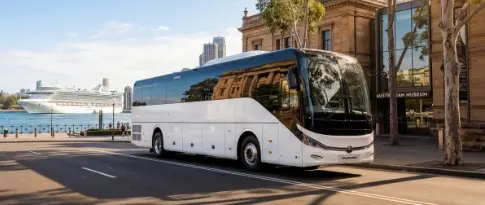
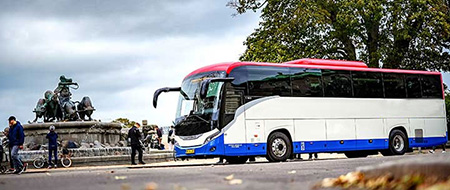
As the local transport industry searches for the slightest improvements in fuel efficiency, Yutong’s range combines a variety of systems into one groundbreaking platform.
When it comes to essential resources, the world has plenty of them. Water. Air. Time. Precious diamonds. Gold. For the current state of the Australasian bus and coach market, it’s hard to argue there’s a more precious resource than fuel.
As fuel price rises have impacted numerous transport operators to start 2026, the industry has been looking at ways to maximise every single drop of diesel. Now, global bus and coach manufacturers like Yutong are bringing the most fuel-efficient models in its stable to Australia to make day-to-day operations more affordable and reliable for the nation’s transport providers.
“As the global public transport sector evolves, operators are navigating increasing complexity and uncertainty,”Yutong Australasia managing director Kevin Liang told ABC.
“Yutong responds with a clear focus on real-world operational value. We support customers in making better decisions, achieving stronger returns and sustaining reliable, long-term operations backed by consistent and dependable service.”
How Yutong does this is by creating a customer-centric system that spans the entire lifecycle of a vehicle, from the right solution to advanced fuel saving and energy efficient technologies. When it comes to building fuel saving technology into its growing fleet of vehicles, Yutong has focused on precise powertrain matching and effective control of energy losses, including cooling and aerodynamic drag to foster consistent driver performance.
In real-world operation, Yutong has found powertrain variation can lead to a more than 10 per cent difference in fuel consumption, while driver behaviour alone can also result in a more than 10 per cent variation, even on identical routes. To counter this, Yutong’s fuel efficiency focus is all about system discipline, more than just a component upgrade. Its fuel-saving solution is built around real operating conditions, covering the vehicle, scenario and driver.

“Our solution is structured in three core elements – a high-efficiency powertrain that optimises how power is generated and transmitted, energy management to minimise energy loss across the vehicle system and our BlueCore fuel saving system to achieve optimal fuel efficiency,” Liang says.
When it comes to the high-effi-ciency powertrain, Yutong treats the engine as only the starting point for fuel efficient vehicles. What matters more is whether it operates consistently within its optimal efficiency range and how much of that generated power is preserved as it flows through the transmission and driveline to the wheels.
Key pillars of the powertrain include high-efficiency components that maximise value from every drop of fuel at the source and working with globally recognised platforms like Cummins, Yuchai and Weichai to build with engines that feature high torque at low speeds, advanced combustion technologies and lightweight architectures. By pairing these with transmissions and axles from ZF, Fast, Molead and other leading suppliers, Yutong then also integrates this technology with low rolling-resistance tyres to create a total system of efficiency.
“At a system level, Yutong combines global sourcing with in-house optimisation. Engines comply with Euro III, V and VI emission standards,” Liang says.
“Electronically controlled high-pressure common rail systems precisely manage fuel injection timing and volume, low-friction structures reduce internal losses and aluminium components lower overall weight, while integrated modular design reduces system complexity.”
Adding to this is Yutong’s targeted system optimisation that it applies to its technology. For example, in the intake and exhaust system, reduced pipe length and curvature minimise airflow resistance, optimised intercoolers reduce intake losses and optimised exhaust silencers lower backpressure. These allow the engine to work more smoothly, further reducing energy loss.
“High-efficiency components are not defined by individual specifications alone, but by how engine thermal efficiency, driveline efficiency, rolling resistance and airflow management work together to minimise loss at every stage,” Liang says.
The push to make the latest buses and coaches more fuel efficient in Australia goes beyond power, with Yutong instead concentrating on ensuring powertrains are better aligned with real-world conditions. An engine achieves peak efficiency only when it’s within specific speed and load ranges, meaning the transmission gearing, axle ratio and tyre specifications have to be in sync. It’s this knowledge that has spurred Yutong to match its engine, transmissions and axle ratios based on real route data, targeting more operation within the optimal efficiency range.
This is then supported by a variety of standardised operating conditioning models and real-vehicle data collection from customer routes, taking in gradients, traffic signs, congestion and high-speed segments that are then translated into simulation inputs.
“A truly fuel-efficient vehicle isn’t defined by its engine alone, but by a powertrain system precisely matched to its operating conditions,” Liang says.
When it comes to energy management, Yutong’s motivation has been to turn both visible and invisible losses into fuel-saving opportunities. In operation, energy is consistently dissipated through aerodynamic drag, vehicle weight and thermal systems. Yutong addresses these losses through a system-level approach, focusing on low drag, light weight and thermal management.
Aerodynamic drag becomes a dominant factor when a heavy vehicle travels at high speeds – Yutong’s data suggests up to approximately 50 per cent of fuel consumption is used to overcome air resistance when one of its buses using Yutong’s platform travel at more than 70km/h. By optimising airflow across the entire vehicle, reduced flow separation, turbulence and pressure drag creates an environment that uses less fuel to travel at efficient speeds.
On the vehicle weight side, Yutong’s analysis suggests every one-tonne reduction in vehicle weight in urban stop-and-go operations can lowerenergy consumption by between three and seven per cent. By streamlining design, materials and manufacturing processes, Yutong is ensuring lightweight vehicles are created without sacrificing performance.
“A lighter vehicle does not mean fewer features. It means eliminating unnecessary load, with every kilogram reduced supported by engineering precision,” Liang says.
A well-known factor in vehicle efficiency when it comes to zero-emissions buses is thermal management. However, this also has an important impact on fuel efficiency for diesel buses. Yutong’s second-generation thermal management flicks to a demand-based system that delivers the exact required airflow when cooling is needed. Between two and six small electric fans (depending on the platform) use an intelligent management system to reduce fuel consumption by up to three to eight per cent.
“From continuous operation to demand-based control, the cooling system becomes part of the efficiency solution, not a source of loss,” Liang says.
In a modern world where fuel-saving methods are a dominant discussion point, Yutong’s global capabilities are allowing the brand to produce efficient models in a time of need. For Australasian customers, this means vehicles at the cutting edge of bus technology filled with numerous smaller benefits to lower diesel use. It’s in these little wins that Yutong has built a system capable of meeting the calls for fuel efficient heavy vehicles.
“Fuel efficiency isn’t defined by a single component, it’s the result of a fully integrated system,” Liang says.
“From high-efficiency engines and precise powertrain matching, to aerodynamic optimisation, lightweight design, second-generation thermal management and BlueCore intelligent assistance, every element is engineered to reduce consumption under real operating conditions. The objective is to ensure that every unit of fuel contributes directly to productive, measurable value on the road.”
Reproduced from ABC (Busnews) with permission

Subscribe Now
Get updates you care about.
Submit